
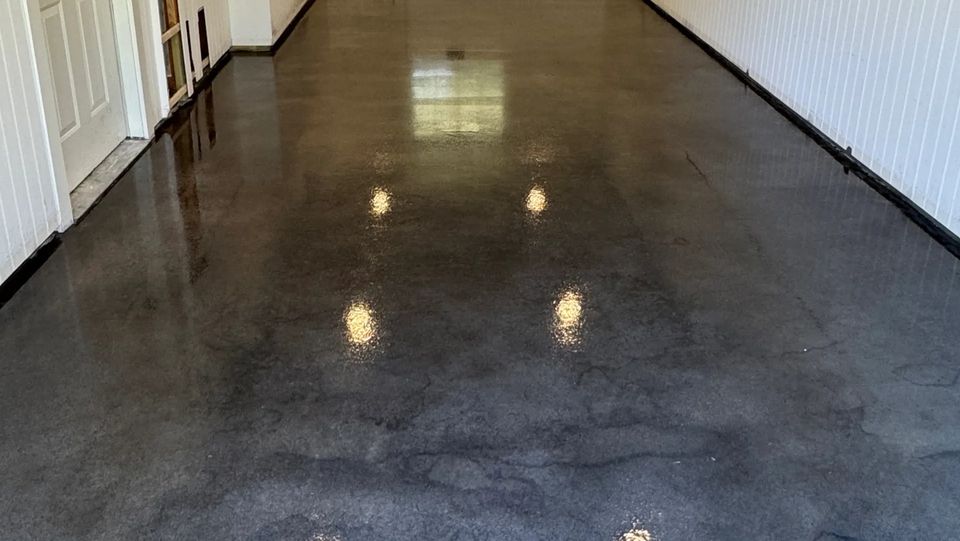
Grind, Stain + Seal: The Art of Transforming Raw Concrete
Beneath every dull, grey slab is a surface waiting to be revealed. Grind, stain, and seal is the process that turns ordinary concrete into a floor that tells a story.
Whether you're upgrading a garage, transforming a basement, refreshing a retail space, or refinishing an outdoor patio, the grind-stain-seal process offers one of the most durable and visually striking concrete finishing methods available. Unlike overlays or epoxy coatings that sit on top of the concrete, this method works with the material itself — grinding it smooth, penetrating it with color, and locking in a protective seal that can last for years.
The results are impossible to fully replicate with any other technique. Each floor is uniquely its own, shaped by the mineral composition of the concrete, its age, and the craftsman's hand. Here's a complete look at how the process works and why it's worth every step.
The Grind: Starting with a Clean Canvas
Everything begins with the grind. This is the most labor-intensive phase of the process, and it's also the one that determines the quality of every step that follows. Using our diamond-tipped grinding equipment, the concrete surface is systematically worked down to a smooth, open, and uniform profile.
The goals of grinding are threefold: to remove any existing coatings, sealers, adhesives, or surface contaminants; to level out minor high spots and imperfections; and, most importantly, to open the pores of the concrete so the stain can penetrate deeply and bond properly. A closed or sealed surface will reject stain, producing uneven, blotchy results, while a properly ground surface acts like a sponge.
The amount of grinding required varies considerably depending on the starting condition of the concrete. A freshly poured residential slab may need relatively light preparation, while an old warehouse floor coated in multiple layers of paint and sealer could require hours of aggressive grinding before it's ready. We carefully assess the existing flooring before specifying a grinding plan.
The Stain: Color That Becomes Part of the Concrete
Once the concrete is fully ground, cleaned, and free of all dust and debris, it's time to apply the stain. This is where the transformation becomes visible — and where the artistry of the process truly shines. There are two primary families of concrete stain, each with a distinct character and application method:
Acid-Based Stains:
These are chemical stains that react with the minerals naturally present in concrete, particularly calcium hydroxide. The reaction produces metalite salts that bond permanently with the concrete and cannot peel, chip, or fade the way surface coatings can. The color palette is earthy and organic — rich tawny browns, deep charcoals, warm tans, and burnished coppers — and because the reaction depends on the concrete's own mineral content, no two floors ever look exactly alike. Acid stains are applied with a sprayer or brush, allowed to react for several hours, then neutralized with a baking soda and water solution and thoroughly rinsed.
Water-Based Stains:
Also called acrylic stains or dyes, water-based options offer a much broader and more vibrant color range, including blues, greens, reds, and virtually any custom color imaginable. Unlike acid stains, they don't rely on a chemical reaction — instead, they penetrate the open pores of the concrete and deposit pigment. The result is more consistent and predictable, with slightly less of the mottled, variegated look that acid stains produce. Water-based stains dry faster, have lower VOCs, and are easier to control for complex multi-color designs.
It is possible to layer both stain types for a completely customized look — using an acid stain base for depth and organic variation, then applying water-based dyes over specific areas for pops of color or detailed patterns. The results can be extraordinary.
Many beautiful artistic effects like marbling, antiquing, and mottling can be achieved, giving your flooring a one-of-a-kind appearance. The concrete's history shows through the stain, too: old saw cuts, aggregate, and patch repairs become part of the visual texture rather than blemishes to hide.
The Seal: Locking In the Work
The final phase is sealing, and it serves two equally important purposes: protecting the stain and the concrete surface from moisture, wear, and staining agents, and achieving the desired finished appearance. The choice of sealer determines the final look and feel of the floor as much as anything else in the process. We'll work with you to determine the best fit for your project.
Why Grind, Stain + Seal Stands Apart
In a world of flooring options — hardwood, tile, luxury vinyl, epoxy flake — grind-stain-seal occupies a category of its own. It doesn't cover the concrete or replace it. It reveals what was always there, enhances it with color and depth, and protects it with a finish built to last.
The process rewards patience and skill above all else. Rushed grinding leaves a poorly prepared surface. Sloppy stain application produces muddy, uneven color. Thick sealer coats fail prematurely. But when each phase is executed with care and craftsmanship by our skilled Gorilla Coatings team, the result is a floor that's genuinely unique — a surface marked by the character and beauty of the concrete itself.
Grind-stain-seal is equally at home in a sleek urban loft, a busy restaurant kitchen, an automotive showroom, or a suburban garage. It's low maintenance, highly durable, and when done well, genuinely beautiful. Once you've seen a properly finished stained concrete floor catch the light, it's hard to look at plain grey the same way again.